TLB's Current Research
These are current research efforts. Related publications will be featured on our posts and linked below in our "library" once complete.
Lake and Fisheries Health
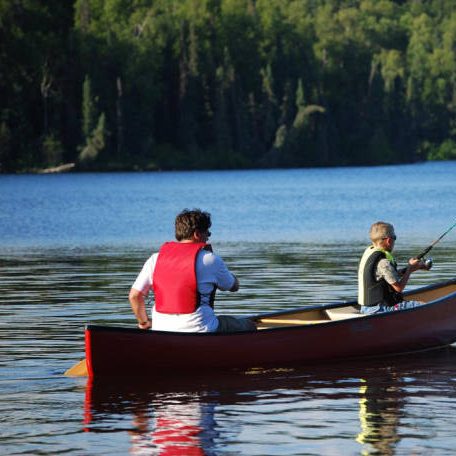
Since 2015, The Land Between has integrated and standardized datasets for thousands of lakes across the bioregion, beginning with priority Lake Trout lakes. The database called the Blue Lakes warehouse, now includes over 30,000 lakes, with ~2,652 lakes containing 20 years of data, sufficient to model lake health, identify trends, and analyze shoreline and watershed development in relation to fisheries and water quality.
Bird Monitoring and Habitat Research
The Land Between conducts bird monitoring and habitat research to better understand the conditions that support bird populations across the region. Our work combines several complementary approaches.
We are installing Motus wildlife tracking towers, which are part of an international network used to track the movements of migratory birds fitted with small radio transmitters. These stations help reveal migration routes, stopover habitats, and seasonal movement patterns.
We also conduct presence–absence surveys and acoustic monitoring, using both field observations and automated recording units to document which bird species are present across different habitats and times of year.
To better understand the habitat conditions associated with bird populations, we assess vegetation structure using Ecological Land Classification (ELC) methods. These surveys help characterize forest composition, canopy structure, and understory conditions that influence bird habitat use.
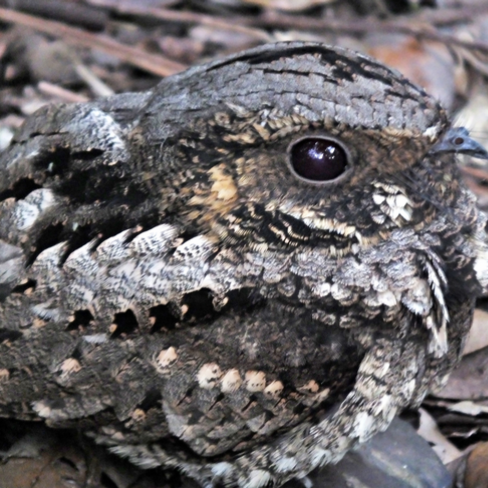
In addition, we have studied Lepidoptera (moths and butterflies) abundance relative to human footprints to ascertain thresholds of food availability for aerial insectivores, particularly the Eastern Whip-poor-will, a species of conservation concern in Ontario. We are now calling on community scientists to support moth diversity research through our Moth Monitors program.
By examining insect abundance and diversity alongside bird observations, this work aims to better understand the relationship between habitat, prey availability, and bird population health.
Together, these approaches help build a clearer picture of bird habitat requirements and inform conservation efforts across The Land Between region.
Turtle Population Ecology and Conservation Science
Turtle Guardians conducts long-term research to better understand turtle populations, habitat requirements, and the impacts of human infrastructure across The Land Between region. Our work combines field monitoring, ecological research, and conservation engineering to inform practical solutions that support turtle recovery.
Road Ecology and Population Monitoring
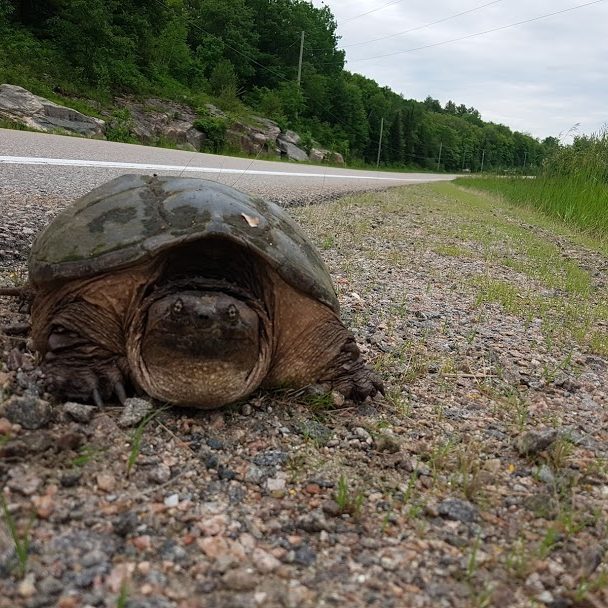
Since 2017, Turtle Guardians has maintained one of the longest-running turtle road ecology datasets in Canada. Staff and trained volunteers patrol dedicated routes each year, collecting standardized data on species, mortality, body condition, and crossing behaviour. These data are used to examine population trends across landscapes and road classes, assess biomass and age-class structure, and identify mortality and nesting hotspots.
Individual Identification and Movement
Individual turtles are tracked using photographic identification and temporary marking techniques. Unique markings on the plastron of Blanding’s turtles and the bridge region of Midland Painted turtles allow individuals to be recognized across seasons, helping researchers understand movement patterns, site fidelity, and population dynamics.
Nest Monitoring and Hatchling Recruitment
Volunteers and staff are trained to recognize nesting behaviour and respond to reports of turtles nesting in vulnerable locations. Nests found along primary roads or construction zones may be carefully excavated and incubated ex situ to protect them from immediate threats. Turtle Guardians operates one of the largest turtle incubation programs in Ontario, helping offset extremely high nest predation rates and road mortality in human-settled landscapes.
Eggshell Integrity Research
Beginning in 2021–2022, Turtle Guardians documented cases where turtle eggs rapidly collapsed after excavation in some locations but not others. This observation has led to ongoing research into eggshell strength, calcium availability, environmental conditions, and maternal health. The work is being pursued with scientific partners, including researchers at the University of Manitoba.
Overwintering Habitat Research
Research is also underway to identify and map overwintering habitats in Ontario’s Highlands and to examine how environmental conditions such as water levels influence winter survival. This work aims to quantify thresholds of critical overwintering habitat and inform wetland conservation and water level management.
Ecopassage Design and Mitigation Testing
Turtle Guardians is also developing and field-testing an ecopassage jump-out fencing system designed to guide turtles toward wildlife crossings while allowing animals to exit roadway corridors. The prototype uses durable materials, is quick to install, and is easy to maintain and repair. The system has been tested in the field for over five years and is currently undergoing engineering review.
Together, these initiatives help improve understanding of turtle populations and inform conservation planning, habitat protection, and practical solutions to reduce turtle road mortality.
See our research details and results here
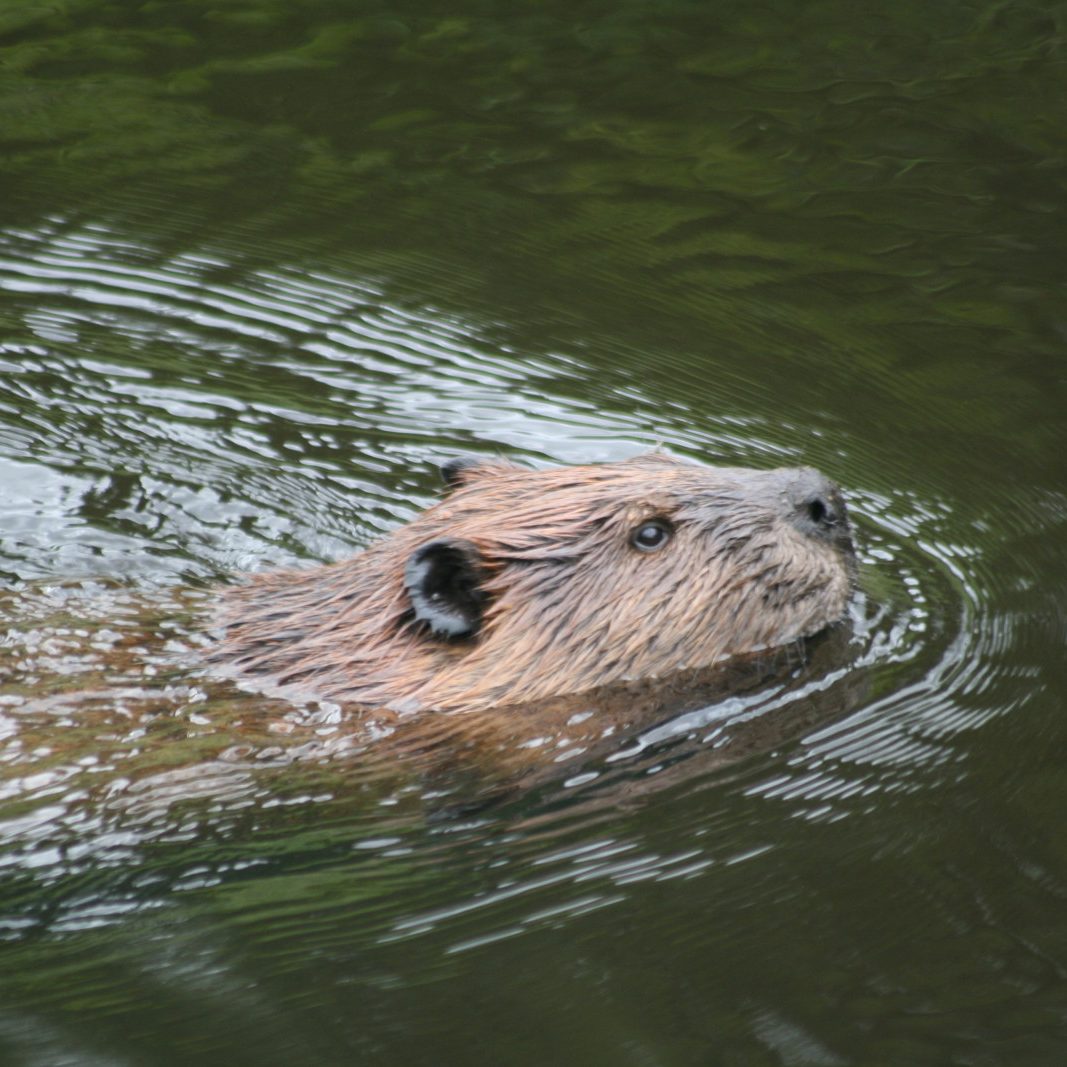
Beaver, Canids, and Human Footprints
The Land Between is conducting research to better understand relationships between beaver populations, canids (including wolves and coyotes), and human landscape change across the region. These species play important roles in shaping ecosystem processes and habitat conditions.
Beavers are well known as ecosystem engineers, creating wetlands that influence water levels, nutrient cycling, and habitat availability for many species. At the same time, wolves and other canids are key predators that help regulate wildlife populations and influence ecosystem balance.
This research combines community observations, discussions with harvesters and land users, and landscape analysis to examine how beaver abundance, predator presence, and human footprint interact across the region. Particular attention is being given to how changes in wetland availability, forest structure, road density, and human settlement patterns may affect these relationships.
By improving understanding of these dynamics, this work aims to support more informed stewardship of wetlands, forests, and wildlife populations across The Land Between landscape.
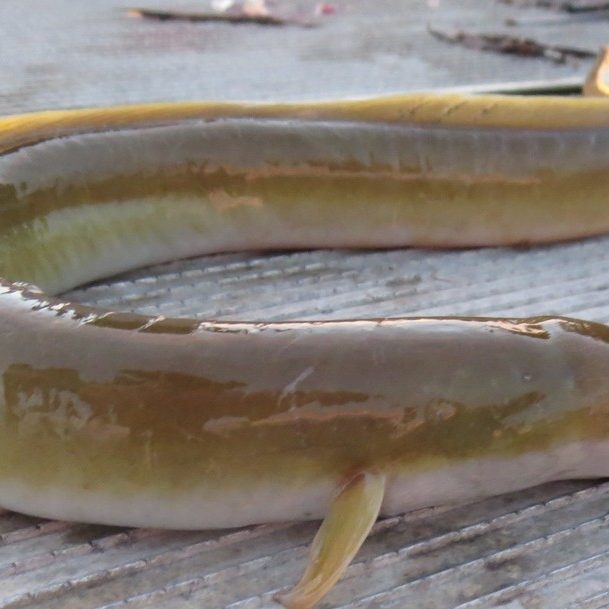
American Eel
The Land Between is conducting research to better understand the historic presence and abundance of American Eel (Anguilla rostrata) within the region’s river and watershed systems. Once widespread across eastern North America, American Eel populations have declined significantly, and understanding their historical distribution is important for informing recovery efforts.
This work involves compiling historical records, archival observations, and watershed data to document where American Eel were historically present across river systems connected to The Land Between region.
In addition, the research is exploring historic biomass estimates using river and watershed modeling, examining how river size, connectivity, and habitat characteristics may have supported eel populations in the past. By reconstructing potential historical abundance, this work helps place current eel observations into a longer-term ecological context.
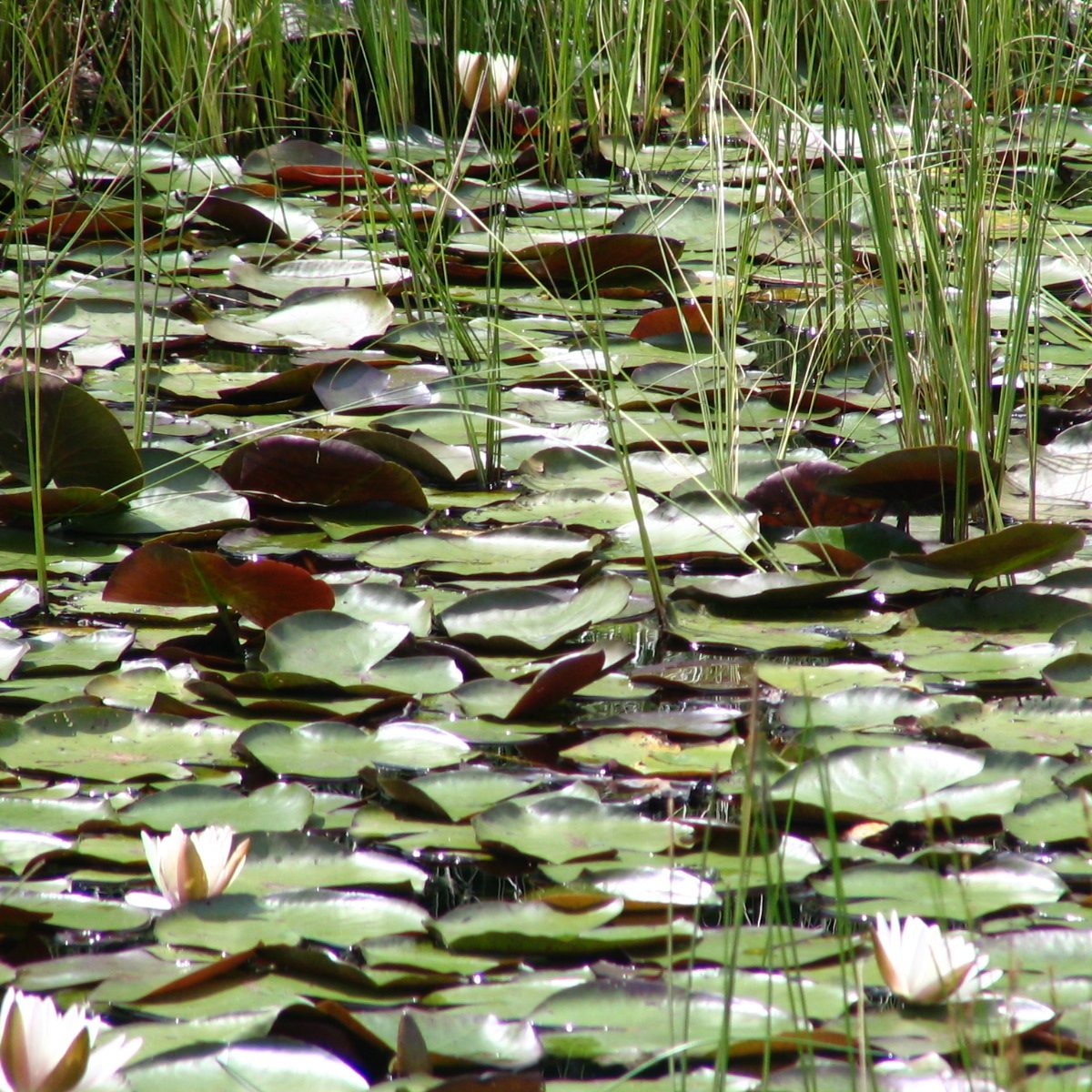
Wetland Hydrological Function
The Land Between is conducting research t
The Land Between is conducting research to better understand how wetlands influence watershed hydrology across the region. Wetlands play a critical role in regulating water movement through landscapes, helping store water during periods of high flow and slowly release it during drier periods.
This work involves modelling watershed hydrographs to examine how the abundance, size, and position of wetlands within a watershed influence the timing and magnitude of water flows. By comparing watersheds with different wetland configurations, the research aims to better understand how wetlands contribute to flood moderation, groundwater recharge, and drought resilience.
Understanding the relationship between wetland distribution and watershed hydrographs can help inform wetland conservation, watershed planning, and climate adaptation strategies, particularly in landscapes where wetland loss or alteration may change how water moves through the system.
Current Partner Research
- We work with Wildlife Preservation Canada (WPC) to do research on grassland birds and loggerhead shrike.
- WPC also works to increase populations of yellow banded bumble bee in The Land Between.
- Scales Nature Park is researching the habitat and range of Massassauga Rattlesnakes, with support from TLB
- We work with Blazing Star Inc. to support their research in eastern musk turtle habitat requirements
- We work with UIT to understand the prevalence of algal blooms in the region
Research and Project Reports
The Land Between supports and works with many organizations, institutions, and individuals for research and conservation. Some files are sensitive and/or accessed through data sharing agreements. Visit our data sharing page for more information.
Browse by category below to view different research results presented by The Land Between!
- The Land Between as an ecotone. Peter Alley, Ben Porchuck, with Leora Berman 2006
- What Do You Mean, The Land Between Leora Berman
- TLB Start Up A Phase 1 Report Overview of elements, challenges and opportunities. Leora Berman 2007
- The Land Between Boundary 2007_Dr. MJ Fortin and Allan Brand
- TLB Boundary Detection_FortinReport_December2008 , Dr. Marie-Josee Fortin and Allan Brand, University of Toronto, 2008
- TLB Boundary Callibration with Habitat and Breeding Bird Occurrences_ Dr. MJ. Fortin- Presentation
- The Land Between Handout on Boundary Detection_Alan Brand
- Natural Heritage Information Centre Inventory of Ecosites and communities; species at risk 2007
- Analysis_Haliburton Soils_brief. Full report and data available to sharing agreement holders.
- Haliburton Highlands Natural Heritage Mapping Haliburton Highlands Land Trust 2008
- Final - The Land Between - Alvars, Derek Matheson, Trent University, 2007
- Ecotone_delineation- Fortin et al.
- From_field_to_objects: A review of boundary detection. Fortin et al
- The Status of Science Examining Ecotones_Risser 1995
- The Benefits of Micro-climates in The Land Between, by Basil Conlin, 2018
- Natural Heritage Information Centre_The_Land_Between_interim_report_Mar10_08- Ecosites and communities; species at risk
- Development Trends and Threats_ summary-report- Exurban Development Threats in The Land Between_summary report, Dr. Tenley Conway and Namarata Shriesthra, University of Toronto, 2009.
- Residential Development ThreatsPresentation_Shriesthra and Conway. 2007
- Natural Heritage Policy_Comparative Study_Katie AllenComparative Survey and Study of Natural Heritage Official Plan Protections in The Land Between, Katie Allen, 2007
- Soil and Water Protection Planning Review_The Land Between_Allen and Benishek - Comparative Study of Shoreline and Shallow Soil-Water Quality Protection in The Land Between, Katie Allen and Nicole Benishek- April 2008
- Shoreline Development - -Developed and Natural Shorelines in The Land Between, Paul Heaven, Glenside Ecological Consultants, 2007
- Mainmap Shoreline Development, Capacity and Lake Trout HabitatCallibration and Review 2013. Horacheck, Roorda, and Rempel. Summary.
- BlueLakesReport2019-FINAL, Research into the Need and Potential Efficacy of the Blue Lakes Ecolabel Program. Danielle Lachance
- Biodiversity Planning and Protection in The Land Between. Samantha Dunlop for Trent University CBR. 2021TLB CBR report - Samantha Dunlop
- Preliminary Thoughts and Images on How Landscape Has Shaped Early History of The Land Between. William Allen.
- Importance of Archaeology re Species at Risk American Eel. Draft 3 2007 10 21 _American Eel_Allen 2008
- Historic Trent Canal. map attached
- Forest Distribution in the Trent River Watershed_1913_Peterborough, Haliburton, Hastings Trent_FOREST_1913
 Historic Place Names of Peterborough and Kawarthas in TLB Origins in North Peterborough and Kawarthas of The Land Between_Leitch, Premkumar and Watt, 2008
- Strata _Archaeology in TLB_ Winter 2014 Vol 4 No 4 The Land Between_Conference_Articles_ Archaeological Society of Ontario
- Farmsteads_a Heritage_Thomas McIlwraith _Thomas McIlwraith, University of Toronto, 2010
- North Limestone Island_William AllenGeorgian Bay_Archaeology and History_William Allen, 2007
- Mississauga Traditional Ecological Cultural Knowledge (contact Curve Lake First Nation Cultural Centre, and if affecting Traditional Rights and Title or the Commons, this is accessed through the Duty to Consult process)
- Ghost Towns in TLB (database and map by request- or see Land Stories)

- Luka-Multiple Residency _Placing the Edges of Cottage Country PhD-summary
- Economic structural breakdown by class of Haliburton County (2014)
- Modernity,_Metaphor_and_Maples_The_Landscape_Created_by_the_Wood_Chemical_Plant_in_Donald_1992_Trent University, Canadian Studies, 1992
- Around the Circle in 365 days . GovernanceStructures for Social Sector Enterprises. Leora Berman.
- Ontario_Cultural_and_Heritage_Tourism Product Report_Brain Trust and Lord Cultural_2009
- A Journey of Traditional Knowledge_Curve Lake FN_Coppaway and edited by Berman for Curve Lake First Nation 2007
- Conservation Needs Collective Knowledge. The Value of Citizen Science. By Emma Halupka, Conservation Technician
- Night Lighting Effects on Birds, Bees, and Don't Forget About the Trees. By Siena Smith. Siena Smith, Conservation Technician 2020
- HIPPO- The Greatest Threat to Biodiversity. Siena Smith, Conservation Technician. 2020
- TLB water quality sensitivity. Summary paper. Leora Berman. 2008.
- Dark Skies for Health_Leora Berman_Can They Affect Health_Leora Berman 2008
- Outdoor Lighting Effects_Dr. Robert Dick, Royal Astronomical Society of Canada_2010
- Guidelines for Outdoor Lighting, Dr. Robert Dick, Royal Astronomical Society of Canada, 2016
- Where have all the stars gone, the costs and impact on human health of artificial light at night. Daniel Grenon. 2020
- The Devastating Impacts of Fireworks on the Environment, by MaryJane Proulx, 2019
- Chemical Sprays and The Land Between, by MaryJane Proulx, 2019
- The effects of Fireworks on Lake Health and Wildlife. Fireworks article. The Land Between newsletter. fall 2016Boyce 2016
- Wrapped in Plastic Daniel Grenon 2020
(for all turtle research see the Turtle Guardians Science and Research page)
-
- Skink Tales_Briar Howes_The Five Lined Skink_Dr. Briar Howes, Parks Canada 2010
- Aging Turtles_Doug Armstrong_How Old is That Turtle_Dr. Doug Armstrong, Massey University_2010
- Turtle UnderpassDesign Best Practices for The Land Between_Heaven with Berman_Haliburton Land Trust 2013
- Blanding's TurtlePopulation and Distribution in The Land Between
- Best Management Practices for Mitigating Threats to Turtle Nests During Road Maintenance - Leora Berman, edits by Kari Gunson
- The Five Lined Skink and The Land Between, Basil Conlin
- Why Garden for Nature?, by Basil Conlin, 2018
- White Oak Dispersal- White Oak Dispersal In The Land Between, Rory Eckensweller, Trent University, 2007
- The Land Between - Alvars_Mattheson Pilot Research Paper
- Pine Trees of The Land Between, Basil Conlin
- Ontario Burdened with Invasive Species Mary Jane Proulx. 2019. Tips & Tricks to manage and report Invasive species in Ontario.
- The Cost of Invasive Species, The Bad News and the Good News. Written by Siena Smith, 2020
- Plants for Nature Gardens: Trees in The Land Between, by Basil Conlin, 2018
- Friendly Shrubs to Plant in The Land Between, by Basil Conlin, 2018
- LeaveTheLeaves.TLB.MJP.October 2019, Why Raking Can Harm Your Lawn and the Environment, by Mary Jane Proulx
- Literature Review of Declining Birds in The Land Between -Mark Bishop, Qaani Curry, Tom Shorney, Sara Street of Sir Sandford Fleming College, 2007
- Eastern whip-poor-will and crucial habitat within The Land Between, Basil Conlin
- TLB DUC Waterfowl -Waterfowl- The Land Between - Ducks Unlimited Canada, Waterfowl, Helene Gravel and Kimi Watanabee, 2007
- Avian Diversity_Andrew Couturier- Breeding Bird Distribution and Abundance_TLB summary, Andrew Couturier et al, Bird Studies Canada, 2009
- Golden Winged Warbler Study within The Land Between. Brian Curren. 2007
- Bird Distribution As Callibration for TLB Boundary_Dr. Marie Josee Fortin
- Kark et al GEB 2007 Ecotones for Avian Diversity _ New World birds
- OFO news 2007 The Land Between and the Carden Alvar_A brief history of the geomorphology, effects of early peoples, birds and ecological importance_Ron Pittaway. 2007
- Apocolypse Meow. How to keep your fur child and wildlife safe by Emma Halupka 2020
- Shoreline Development - Final Report, Paul Heaven, Glenside Ecological Consultants, 2007
- Muskoka River Watershed Inventory Report , Muskoka Heritage Foundation, Phung Tran, 2007
- Episode 1- The American Eel with John Casselman. By Josh Skinner. Podcast
- Otonabee Pimizi American Eel _ American eel on the Journey to the Land Between Draft 4 2007 06 03, Bill Allen, Heritage One, Cultural Researcher
- American Eel Anacat_Final report _ Macgregor
- American Eel Heritage and Management 2008 T2F_William_A_Allen
- American Eel_Managing Magestic Manna_Robert MacGregor, OMNR, 2009
- YouTube: American Eel- Managing a Majestic Manna
- Lake Trout, Capacity and Shoreline Development in TLB haliburton pilot map2
- TLB capacity Lake Trout and shorelines final report 1
- Recreational Boating and the Environment, by MaryJane Proulx, 2019
- Zooplankton Small but Mighty!, by MaryJane Proulx, 2019
- Moose Distribution and Retreat_ French_ Fortin_Goffi_TLB_Rapport20071
- gurd_etal_2001 Conservation of Mammals
- Damselfly and dragonfly literature review. Wylie. 2010
- Rock-Barren Butterflies of The Land Between, by Basil Conlin, 2018
- Rock-Barren Butterflies of The Land Between, Basil Conlin