
Trees & Shrubs of The Land Between
Backyard Community Science Program
Trees and shrubs are incredibly important to healthy ecosystems! They help to stabilize soils and redistribute water which allows other plant species to thrive, they create micro climates that help to regulate surrounding temperatures and provide a 3D landscape of habitat for birds, mammals, and insects and directly provide food innumerable species- including us! By clicking the buttons below you can access lists of featured tree and shrub species that you can observe in the Land Between during each season. This is not a comprehensive list, but will help you identify some common species to get started!
PLEASE NOTE: the Summer, Autumn and Winter pages are currently unavailable because they are under construction.
How to help trees in my community
Tree are large perennial plants that take many years, sometimes even decades, to reach a large enough size to successfully reproduce! Therefore, the best thing that you can do for tree is to let them grow whenever possible! Consider allowing trees to flourish on your property and trimming unwanted branches rather than cutting down healthy trees. Also, consider naturalising an area of your property by refraining from mowing in certain areas and even planting trees! When you refrain from moving you give saplings the chance to become big strong trees.
Many trees in Ontario are under treat from invasive species and pathogens. Learn about the signs of infection and if you notice any infected trees on your property explore how you can treat and save them. One invasive species that is becoming more present in The Land Between is the Spongy Moth (also known as the LDD Moth or Gypsy Moth). These moths have been introduced from Europe and cause significant damage to North American trees through excessive defoliation (they eat lots of the trees leaves). To learn more about the Spongy Moth, what to look for and how to stop them from damaging you trees please click here.



Trees & Shrubs in Spring
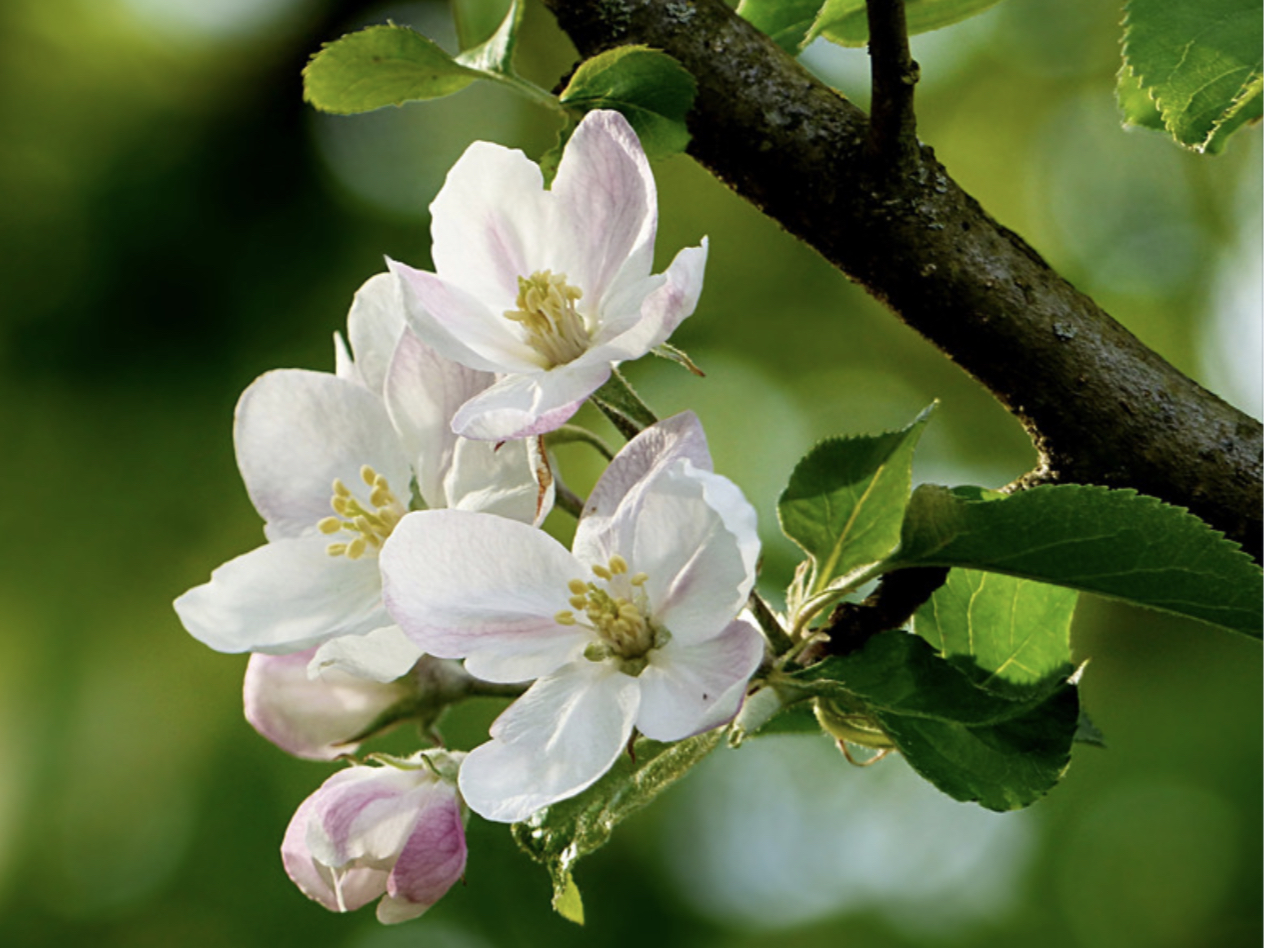
Spring is an time of reawakening and growth! After a long winter dormancy, deciduous trees, shrubs and other plants start to burst with life. With fresh leaves starting to unfurl and flowers petals floating on the breeze, spring is a wonderful time to get to know your woody neighbours! Check out our activity sheets and featured species below to learn more!
Activity Sheets
Download and print our activity sheets to have some extra fun learning about and searching for trees & shrubs during your Bioblitz!
Featured tree species that you are likely to find in spring!

Alternate-Leaved Dogwood

Hobblebush

Wild Apple

Downy Arrowwood

Mountain Ash

Wild Raisin

Black Cherry

Nannyberry

Yellow Birch

Chokecherry

Red Osier Dogwood

Highbush Cranberry

Serviceberry
More information about our featured species!
Alternate-Leaved Dogwood
(Cornus alternifolia)
Description: The alternate-leaved dogwood is a small tree that can grow up to 10 meters tall- 30 feet. The bark is smooth and grey to green with some vertical striations.
Leaves: The leaves are alternate and ovate to oblong in shape (Like a wide lance) and 5-12 cm long. The leaves have very distinct veins that curl in towards the pointed tip of the leaf.
Flowers: The flowers are small with 4 petals and they clump in umbrella shaped groupings.
Habitat: Alternate leaved dogwoods are most frequently found in forest understories and forest edges. They can tolerate a wide range of soil moisture.
Flowering Months: May-June
Fun Fact: The berries of the alternate leaved dogwood are a dark blue and will stain your skin purple! The stain will fade to red and can last for hours.
Downy Arrowwood
(Viburnum rafinesqueanum)
Description: Downy Arrowwood is a shrub that grows up to 2 metres tall and it has light brown to grey branches that are slightly hairy.
Leaves: The leaves are opposite and are round to slightly lance shaped with a round to heart shaped base, and they are 3-9 cm long. The are coarser toothed and have very defined leaf veins.
Flowers: The flowers are very small and white and are in clusters from 2-7 cm cm across.
Habitat: Dry upland forests with pines and oaks.
Flowering time: May-June
Fun Fact: The berries of this species looks similar to blueberries.
Black Cherry
(Prunus serotina)
Description: They have scaly black to grey bark and reach heights up to 22 metres or 80 feet and sometimes even taller!
Leaves: Leaves are simple, alternate, oblong and finely serrated with a pointed tip and from 5-15cm long.
Flowers: Small white flowers with 5 petals growing in long clusters.
Habitat: Shade intolerant, young trees commonly found in fields or clearings, while fully grown trees can be found in many forest habitats tolerating a wide variety of soil moisture.
Flowering Months: Late May
Fun Facts: The fruit of black cherry trees are an important food source for wildlife! The wood from the black cherry is a valuable hardwood used for fine woodworking. In fact, it is valued over other cherry species as it is the largest cherry tree species in the world.
Chokecherry
(Prunus Virginiana)
Description: Mostly smooth bark that is dark brown to rust red underneath has a papery look similar to birch that gets peels or scales with age. Trees can get to over 20 feet tall and grow in clusters near one another.
Leaves: The leaves are simple, alternate, and smaller than that of the black cherry and tend to be more ovate, but they have the same colouration and serration.
Flowers: The flowers are also very similar to the black cherry growing in long clusters and having five white petals per flower.
Habitat: Common in disturbed sites and open areas along roadsides and fields. They will tolerate a wide range of soil moisture but tend to prefer well drained sandier soils..
Flowering time: Late May
Fun Fact: The cherries of the chokecherry are very bitter and sour (hence the name chokecherry), but sweeten as they ripen!
Highbush Cranberry
(Viburnum trilobum)
Description: Despite its name the high bush cranberry is not a cranberry, and the berries are not edible either! The highbush cranberry is a small tree species rarely exceeding 5 meters in height. The bark of this species is grey and rough.
Leaves: The leaves are opposite and usually have three lobes similar to that of a maple leaf and are 5-10cm long, the veins of the leaves are also depressed.
Flowers: The flowers grow in umbrella shaped clusters with large 5 petaled flowers in a ring around a center of smaller flowers. The outer flowers are white and the inner flowers are white to green.
Habitat: Highbush Cranberries can grow in a large variety of habitats, but prefer full sun exposure near water sources like lakes and rivers.
Flowering Months: May-June
Fun Facts: The berries of this plant are eaten by birds and small mammals and can stay on the plant over the winter providing food for a long period of time.
Hobblebush
(Viburnum lantanoides)
Description: The Hobblebush is generally considered a shrub only growing up to 4 meters tall. The branches are pendulous and hang to the ground and will take root spreading the plant.
Leaves: The leaves are opposite and are large 10-20 cm long and almost round in shape with a slightly pointed tip. The leaves are also velvety rather than glossy.
Flowers: The small flowers grow in large umbrella shaped clusters and are white to pink in colour.
Habitat: Moist forest understories especially in mixed hardwood forests.
Flowering time: May-June
Fun Fact: The name Hobblebush comes from the habit of this plant to have low branch that root into the ground forming tripping hazards on trail.
Mountain Ash
(Sorbus americana)
Description: The Mountain Ash is a medium sized tree growing up to 15 meters tall (50 feet). The bark is generally smooth and greyish yellow when young and becomes more vertically figured and grey with age. NOTE: Distinguishing between European and American mountain ashes can be difficult, as you can guess the European counterpart was introduced from Europe.
Leaves: The leaves of the mountain ash are compound, meaning one leaf is divided into small leaflets that look like their own leaves. The leaves are alternate and can be up to 20 cm long. The leaflets are usually lance shaped but this can vary towards oval shaped, highly serrated, and have asymmetrical bases each compound leaf has a leaflet on the very end.
Flowers: The flowers grow in large clusters and they are re white to yellow in colour with five rounded petals and long fluffy stamens. Flowers turn into bright orange-red berries.
Habitat: Mountain Ash trees can tolerate a wide variety of habitats and are fairly short lived so they can be found in most habitats, but they do prefer open areas with moist soils.
Flowering Months: May-June
Fun Facts: The berries of the Mountain Ash are very astringent and not palatable but have historically been used in traditional medicine in North America, Europe, and Asia where various mountain ash or “Rowan tree” species can be found!
Nannyberry
(Viburnum lentago)
Description: The Nannyberry is a small tree growing up to 10 meters tall. The bark is reddish brown to grey and is scaly. The twigs are green at first, turning into the trunk colour with age.
Leaves: The leaves are opposite and oval shaped and 5-10cm long and are finely serrated. When the leaves are young they are a little Downey, but when fully grown they are smooth and have small black dots on their undersides.
Flowers: The flowers are very small at only about 0.5cm in diameter with five off white petals and are in large clusters.
Habitat: Nannyberries like open wet habitats like ditches, wetlands, and the riparian areas of lakes and rivers.
Flowering time: May-June
Fun Fact: The small blue fruits of this plant are edible, and used in traditional Native American medicine.
Pin Cherry
(Prunus Pensylvanica)
Description: The Pin Cherry is a small short lived tree species living between 20-40 years, it can grow to 50 feet tall but most don't exceed 30 feet. It has black bark with brown and red tinges and raised horizontal ridges called lenticels that give it a look similar to birch bark. Unlike the chokecherry the bark stays smoother even into their maximum growth.
Leaves: The leaves are simple, alternate, very thin, and are oblong with pointed tips and serrated edges and are usually 4-11 cm long.
Flowers: The flowers of the Pin Cherry occur in smaller clusters than the chokecherry and black cherry usually from 5-7 flowers, and the flowers themselves are larger, usually around 1cm in diameter.
Habitat: Rocky hillsides, field edges, and recently burned forest sites.
Flowering Months: May
Fun Facts: The Pin Cherry is also known as the fire cherry because they are some of the first trees to come up after fire. The seeds can lay dormant in the soil for long periods waiting for fire or other disturbances to open up the canopy and give them enough light to grow.
Red Osier Dogwood
(Cornus sericea L.)
Description: The Red Osier Dogwood is a small shrubby species that grows in thickets and is usually 4-12 feet tall. Young growth is smooth and no red in colour, while old growth is grey and scaley.
Leaves: The leaves are opposite, and ovate to oblong in shape (Like a wide lance) and 5-12 cm long. The leaves have very distinct veins that curl in towards the pointed tip of the leaf.
Flowers: The flowers are small with 4 petals and they clump in umbrella shaped groupings.
Habitat: Red Osier Dogwoods like moist soil so they are often found in and near wetlands, river and lake edges, and wet meadows and fields.
Flowering time: May-June
Fun Fact: The berries in the late summer and fall are white with black dots on the end making them look like little eyes.
Serviceberry
(Amelanchier sp)
Description: Serviceberries are generally a small tree growing between 15 and 40 feet tall, but they are capable of growing to be an upper canopy tree over 60 feet tall. The bark of the serviceberry is smooth and grey with light coloured blotting when young and vertical stripes or fissure when older.
Leaves: The leaves are ovate or elliptical with a pointed tip and fine serration.
Flowers: The flowers are white with hints of pink and grow in long clusters or racemes. Each flower has 5 petals.
Habitat: Serviceberries are shade tolerant, but grow best in full sun and also tolerate a wide range of soil moisture, so they can be found almost anywhere. Most commonly they are seen as understory trees in mixed or hardwood forests and forest edges.
Flowering Months: April-May
Fun Facts: The name Serviceberry apparently comes from the flowering time of the tree in the Appalachian mountains signalling that the dirt roads are good enough to be travelled and regular Sunday church service can begin, or that the ground is soft enough to bury the dead from winter.
Wild Apple
(Malus Sp)
Description: Apple trees are medium in size growing around 30 feet tall with very algae spreading crowns. Their bark is usually brown to grey in colour and is smooth when young becoming scraggly and fissured with age.
Leaves: The leaves are whorled (many coming out of a single point) and are round to ovate with a matte green colouration and feel and sometimes they have indentations in the leaves creating a semi lobed appearance and they have an asymmetrical base.
Flowers: The flowers of the apple tree are white to pink and have five petals. The flowers come out near leaf bases sometimes in small clusters and can be from 2-5cm in diameter.
Habitat: Roadsides, fields, meadows, and new growth forests.
Flowering time: May
Fun Fact: Ontario only has one native apple species that is found in southwestern Ontario in the Carolinian forests called the coronaria crabapple. The majority of apple trees found in the land between are hybrid species derived from domesticated apples introduced by Europeans.
Wild Raisin
(Viburnum nudum)
Description: The wild raisin is very similar to the nannyberry. They tend to be shorter than the nannyberry growing to 5 meters. The bark is also reddish brown to grey and is scaly, and older twigs have a purple hue.
Leaves: The leaves are opposite and are oval shaped and 5-10cm long and differently than the nannyberry which are finely serrated; these leaves have smooth edges or warily serrated edges and blunted tips. The leaves of the wild raisin also have some fine hairs on the underside of the leaf veins while the nannyberry does not.
Flowers: Tiny white flowers grow in clusters.
Habitat: Wild raisins like open wet habitats like ditches, wetlands, and the riparian areas of lakes and rivers.
Flowering Months: Late May- June
Fun Facts: The berries of the wild raisin are edible and good. They start off pink and turn purple and blue as they ripen.
Yellow Birch
(Betula alleghaniensis)
Description: The Yellow Birch is a large tree reaching up to 80 feet tall. The bark is smooth and papery when young with a golden sheen. As the tree ages the bark begins to become more scraggly and looks almost scaley and more grey in colour. With age they tend to look weepy as well.
Leaves: The leaves are alternate, oval in shape, serrated and have a pointed tip, and usually between 2-12 cm long.
Flowers: The yellow birch has different male and female flowers. The male flowers are called catkins, they are long 5-10cm hanging clusters that are yellow to purple. The female flowers stand upright and are 1-3cm tall and oval shaped.
Habitat: Yellow Birch trees tend to live in et lowlands on the borders of riparian habitats like lakes, rivers, streams, and wetlands.
Flowering time: Late May-June
Fun Fact: The young twigs of the Yellow Birch taste and smell a little like wintergreen!